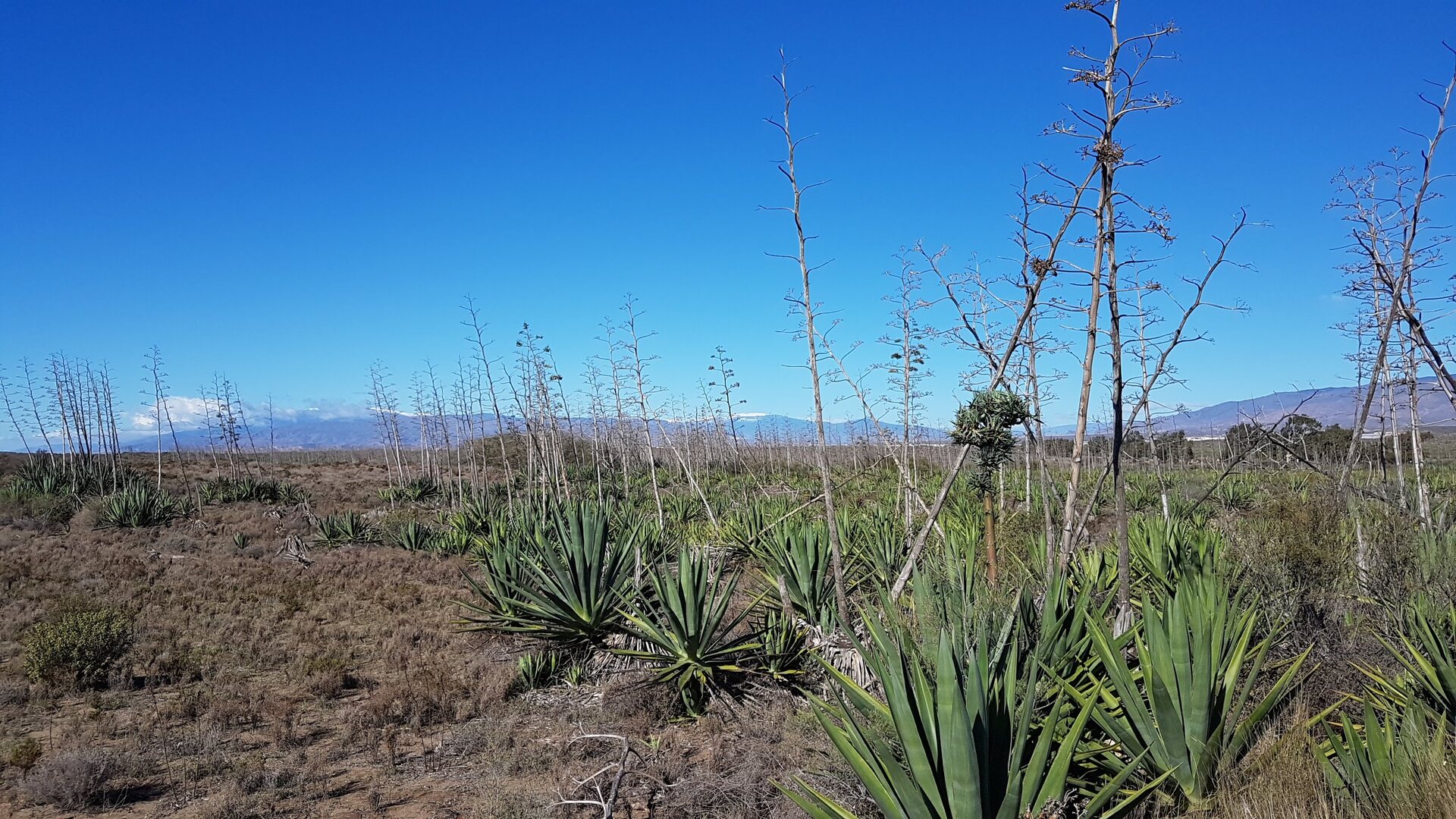
Four very different beaches, ancient volcanoes, medieval history and a little Hollywood — all within easy reach of La Isleta del Moro.
At a glance: Start in La Isleta del Moro · 5–7 hours for the full outing · Car plus short walks · Los Genoveses, El Barronal, Mónsul and Cala de la Media Luna · Best for landscape lovers, photographers and families willing to take a shorter route.
South of La Isleta del Moro, the coast changes character. Beyond the village of San José, the paved road ends and an unpaved track leads towards broad sandy bays, dark volcanic rocks and small coves backed by dry hills. There are no seafront apartment blocks here. These beaches are part of the protected Cabo de Gata-Níjar Natural Park, and their undeveloped surroundings are a large part of their appeal.
Our favourite approach is to make a day of it: start at Los Genoveses, continue to Mónsul, explore Barronal on foot if you feel like walking, and finish with the smaller Media Luna cove. Return through San José for lunch or a drink. There is no need to rush or to try to swim at every stop.
The route from La Isleta del Moro
Leave La Isleta del Moro towards San José, passing the area of Los Escullos and El Pozo de los Frailes. The drive to San José is usually around 20–25 minutes. This is a good place to buy water and snacks: do not expect cafés or shops at the wild beaches.
From San José, take the signed track towards Genoveses and Mónsul. It is unpaved and may be rough, dusty or unsuitable following heavy rain. Drive slowly and use only designated parking spaces. The easiest plan outside restricted-access periods involves one stop near Los Genoveses and a second near Mónsul. The other two beaches can be reached on foot by permitted paths. In summer, you may need to use the seasonal shuttle instead of your car.
Suggested day plan
| When | What to do |
|---|---|
| 09:00 | Depart La Isleta del Moro |
| 09:30–10:45 | Walk and take photographs at Los Genoveses |
| 11:00–12:00 | Visit Barronal on foot, subject to the chosen access path |
| 12:00–13:15 | Explore Mónsul, its volcanic rocks and views of the dune |
| 13:15–13:45 | Optional short stop at Media Luna |
| 14:15 onwards | Lunch in San José, then return to La Isleta |
Times are approximate rather than a timetable. Allow longer if you want to swim, take photographs or walk the full official Genoveses trail.
Los Genoveses: a bay with a history
Los Genoveses is a huge arc of sand between low headlands. Behind it lie open fields, scattered vegetation and an old agricultural landscape rather than a row of hotels. The bay is bordered by Cerro del Ave María and the volcanic Morrón de los Genoveses. Its spacious setting makes it a particularly rewarding place for an unhurried walk.
The name refers to the Genoese fleet associated with the Christian conquest of Almería in 1147. Ships from Genoa joined the coalition led by Alfonso VII, and local historical tradition connects their landing with this bay. The contrast with its peaceful appearance today is striking: the same coastline once belonged to a world of armed fleets, Mediterranean trade and fortified ports.
Look for the old windmill near the access area. It recalls a time when the valleys behind the beach were cultivated and wind powered local agricultural work. Cabo de Gata is not a landscape untouched by people; rather, it is a coast where many traces of older rural life remain visible without large-scale modern development.
For keen walkers, the official Los Genoveses trail is 2.3 km one way and rated easy, although the park gives an estimated walking time of around 90 minutes in one direction. For this outing, a shorter walk from the beach access is perfectly satisfying. The water can look shallow and calm, but wind, waves and currents still require caution, especially with children.
Suggested time: 60–90 minutes for a short beach visit.
El Barronal: dunes, plants and quieter surroundings
Barronal is often less busy than its famous neighbours. Dark volcanic rocks surround a natural beach, and the sand dunes support vegetation adapted to salty air, dry conditions and constant wind. You reach it on foot from a permitted access route; the walk and its difficulty depend on the parking area and path you choose.
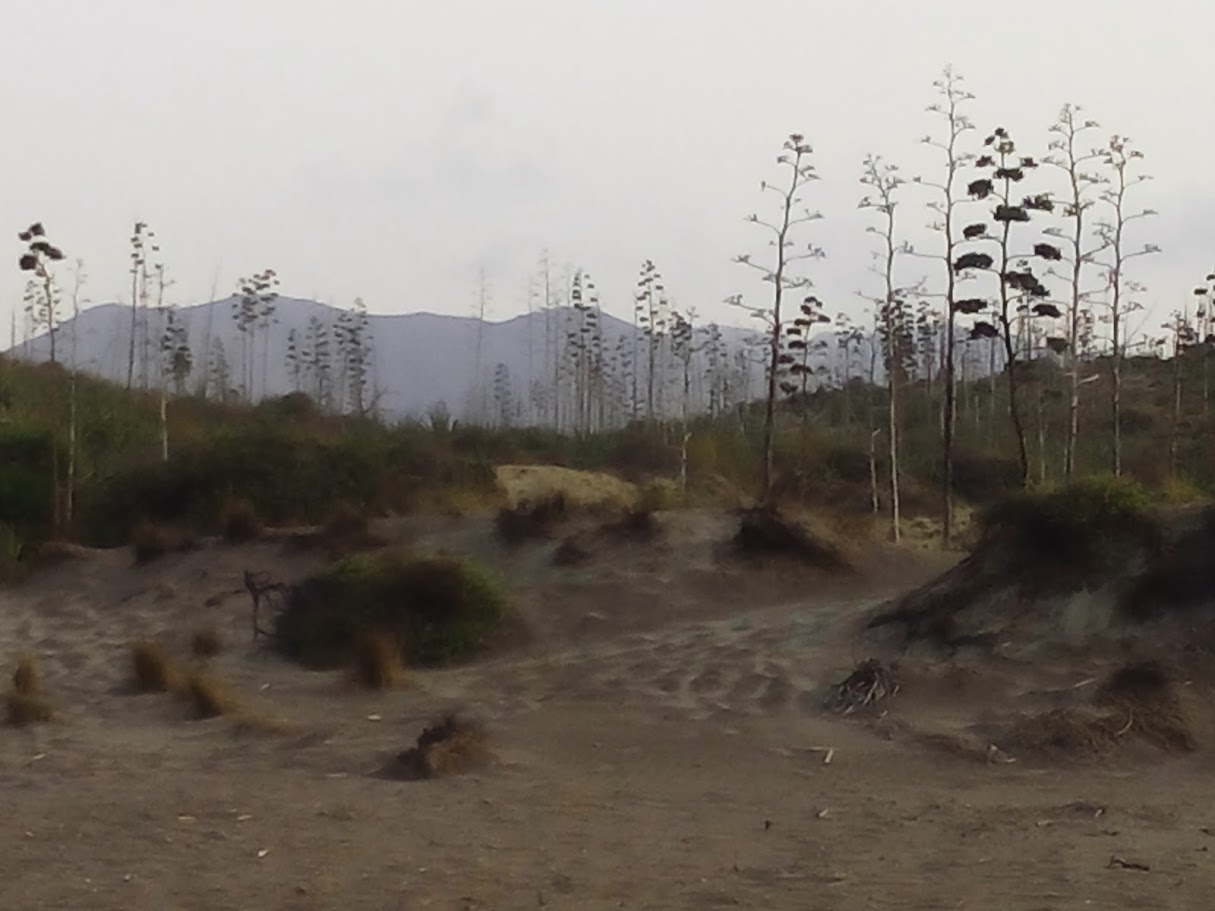
The name has a surprisingly botanical origin. Barrón is a Spanish name for Ammophila arenaria, a dune grass whose roots and underground stems help hold shifting sand in place. It is a small reminder that dune plants are not decorative: they actively shape and protect the coastline.
Stay on established paths, and do not trample vegetated dunes to take photographs. The neighbouring rocky coves can tempt experienced walkers, but their uneven and sometimes exposed paths are not part of this easy day-trip route.
Barronal also has a longstanding naturist tradition. Visitors should respect other beach users' privacy, particularly when taking photographs.
Suggested time: 45–60 minutes including a short approach, longer if walking from farther away.
Mónsul: ancient volcanoes and Indiana Jones
If you visit only one beach for its landscape rather than swimming, make it Mónsul. The unmistakable volcanic formation known as La Peineta rises beside the shore. Behind the beach, a large sand dune climbs towards the rocky slopes; around it, dark geological formations give Mónsul an almost cinematic appearance.
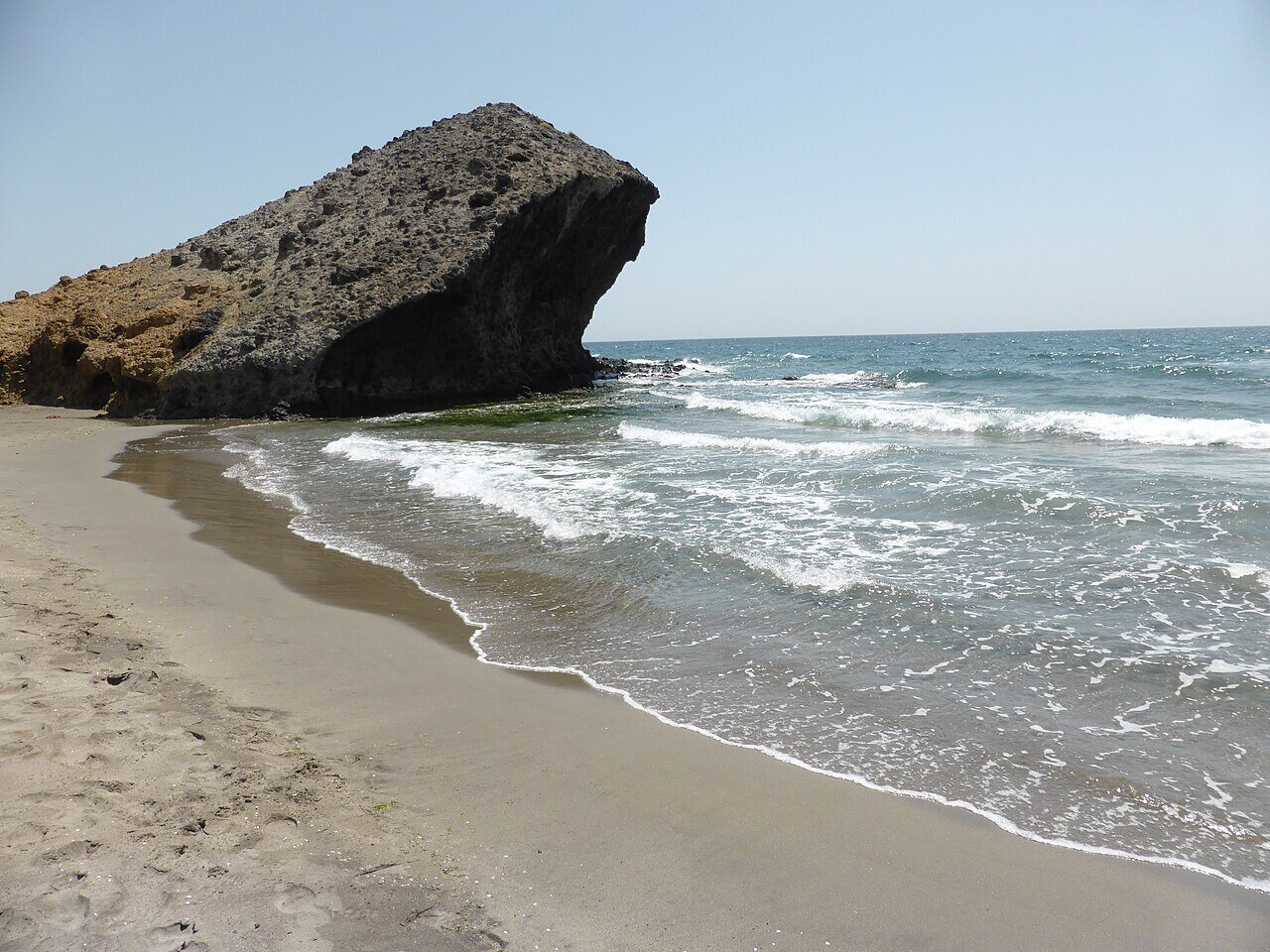
That appearance has deep geological roots. Cabo de Gata was shaped by volcanic activity during the Miocene, millions of years ago. Some eruptions took place underwater, where contact between hot volcanic material and water fragmented the rock. Erosion, uplift and the sea later exposed and sculpted the formations visible today. Take time to look at the different colours and textures of the rock — from a safe position rather than by climbing it.
The dune is another story of landscape in motion. Wind blows sand inland and up the slope, gradually building a ramp dune. It is also a fragile habitat. In 2026 the Andalusian authorities described protective fencing, sand traps and vegetation-restoration work around Mónsul. Do not climb the dune or cross barriers: admire it from permitted areas.
Film fans may recognise Mónsul from Indiana Jones and the Last Crusade (1989). In the famous beach scene, Henry Jones Sr. uses his umbrella to startle birds into the path of a pursuing aircraft. The surrounding Almería landscapes have appeared in many productions, but this is one of the coastline's best-known screen moments.
The beach is worth a visit in every season. Lower sunlight can bring out the shapes of the rocks beautifully; in summer, however, there is limited shade and the beach can be busy.
Suggested time: 60–90 minutes, or longer for swimming.
Cala de la Media Luna: a small crescent cove
Just beyond Mónsul lies Cala de la Media Luna, a smaller, curved beach tucked between volcanic headlands. Its name means “half-moon cove”, a reference to the shape of the shore. Compared with the long sweep of Genoveses, it feels more enclosed and intimate.
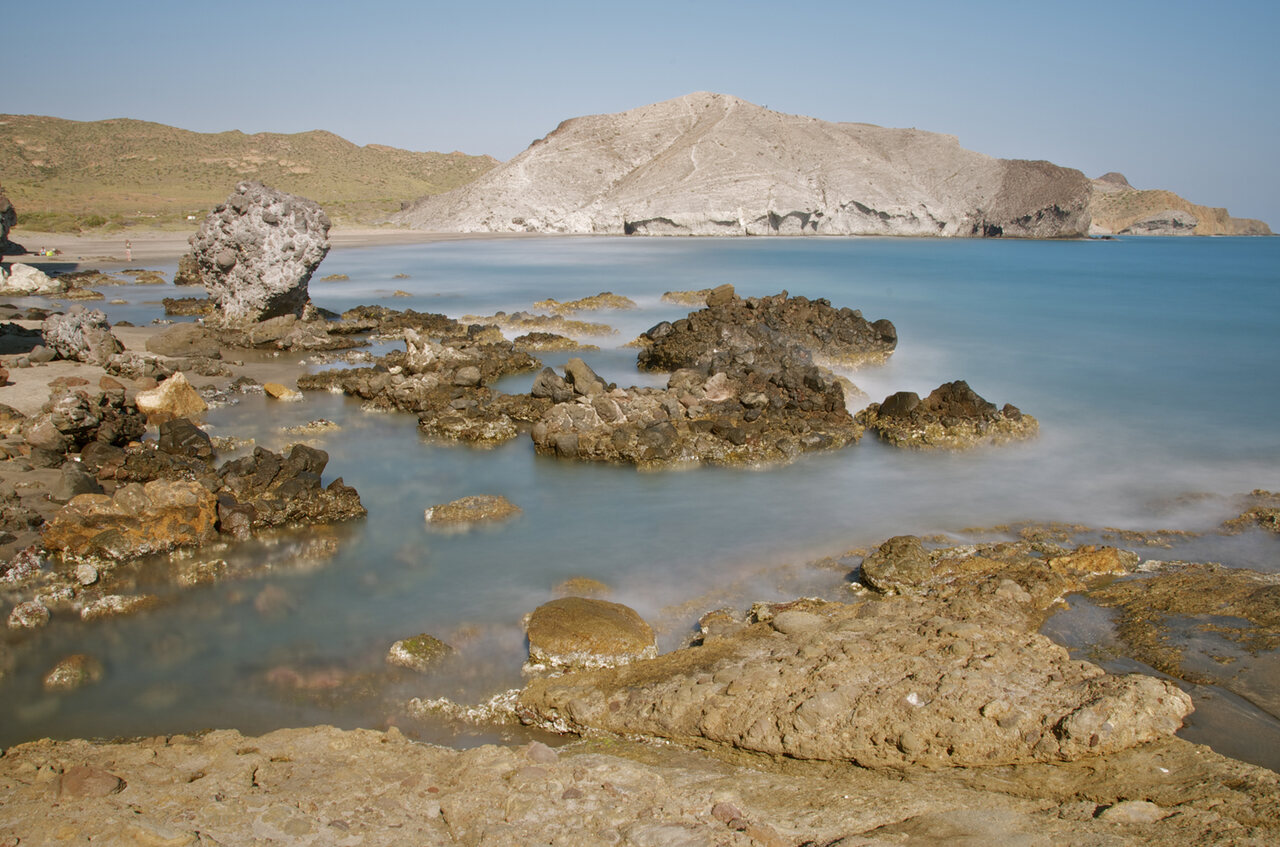
This is a pleasant optional finale, not a mandatory fourth stop. Follow permitted paths from the Mónsul area; depending on your starting point, the walk may take only a few minutes. In calm conditions the rocky surroundings can appeal to snorkellers, but a sheltered-looking cove is not necessarily safe when wind or swell increases.
Suggested time: 20–30 minutes for a short look around.
Which beach should you choose?
| Beach | Best reason to visit |
|---|---|
| Los Genoveses | A long sandy walk and a remarkable medieval story |
| Barronal | Dune vegetation, volcanic scenery and a quieter atmosphere |
| Mónsul | La Peineta, geology, photography and cinema history |
| Media Luna | A small crescent-shaped cove close to Mónsul |
Short on time? Choose Genoveses and Mónsul. Travelling with small children? Two beaches can be more enjoyable than trying to tick off all four.
Driving, parking and the summer shuttle
The beach road is unpaved. Under normal dry conditions ordinary cars commonly use it, but potholes, loose gravel and rain can affect access. Check any restrictions in your rental-car contract. Never park outside designated spaces or drive onto a beach.
Summer restrictions change each year. In 2026, the Junta de Andalucía regulated motor-vehicle access to these beaches from 20 June through 27 September. A special bus from San José ran from 11 July through 6 September 2026, stopping at Genoveses, Barronal, Mónsul, Media Luna and Cala Carbón. These dates are historical; they are not a confirmed schedule for future summers. Before visiting, check the Andalusian government's access information and Níjar's shuttle announcement, as well as current road signs.
Practical tips for a comfortable visit
Bring water, food, a hat, sunscreen, shoes with good grip and a bag for your rubbish. Shade and facilities are scarce. Spring and autumn are excellent for walking, while summer is best approached early in the day. Check the weather and sea forecast: the direction and strength of the wind matter here, and swimming is not always appropriate. Children need close supervision near water, cliffs and rocks. Dogs are subject to local and seasonal beach rules, so verify the signs rather than assuming they are permitted.
The dunes, vegetation and offshore seagrass are part of a protected ecosystem. Use established paths, avoid collecting natural materials, respect closures and do not disturb wildlife. A beautiful photograph never justifies damaging a fragile habitat.
Finish in San José — and return to La Isleta
After the open beaches, San José offers a gentle contrast: a harbour, cafés, restaurants and a waterfront promenade. It is a convenient place to stop for lunch before the short return journey to La Isleta del Moro.
Staying in La Isleta makes trips like this especially easy: explore dramatic volcanic landscapes during the day, then come back to a small fishing village and the familiar calm of its waterfront. For another very different outing, read our day trip to the Cabo de Gata salt pans, flamingos and lighthouse.
Frequently asked questions
Can I visit Genoveses and Mónsul in one day?
Yes. A shorter trip to these two beaches takes around 3–4 hours from La Isleta del Moro, depending on traffic, access and how long you stay.
Which beach is best for families?
Genoveses has a broad sandy shoreline and is often the simplest choice for a relaxed beach visit. Sea conditions still determine whether swimming is appropriate.
Can I reach every beach by car?
No. Vehicles must remain on authorised roads and in designated parking areas. The last section to Barronal and Media Luna is on foot, and summer restrictions may limit car access to the entire area.
Can I climb the Mónsul dune?
No. The dune is a fragile protected feature and has been the subject of restoration work and access barriers. View it from permitted places.
Are there cafés or lifeguards at the beaches?
Do not rely on either. Bring supplies from San José and check locally for any seasonal services.
Sources and planning
- Official Los Genoveses trail — Junta de Andalucía
- Los Genoveses and the 1147 landing — Níjar tourism
- Access and dune conservation in 2026 — Junta de Andalucía
- Seasonal beach shuttle in 2026 — Níjar council
- Geology and the Barronal name — Cabo de Gata
- Photo: Playa de los Genoveses, San José by José Antonio JG, CC BY-SA 4.0 · resized.